
What Really Drives the Price of a Precision Machined Part?
At Tool Technology, we manufacture highly complex precision components for industries where quality is critical. Every application has unique requirements, and each design decision, from tolerances to part geometry, influences the time, tooling, machining, and inspection required to manufacture a component.
These factors all contribute to the final cost per piece.
When it comes to pricing, transparency matters. That’s why we’re here to break it down for you. Here are the design decisions that have the biggest impact on the price of your parts.
Part Complexity Increases Machining Time
One of the largest cost drivers is complexity.
Requirements such as multi-face features, precision mounting holes, thin walls, and concentric features all increase the amount of work required to produce a component.
This means extensive planning, additional machining operations, specialized tooling, longer cycle times, and more in-process inspections, all of which ultimately contribute to higher per-piece costs.
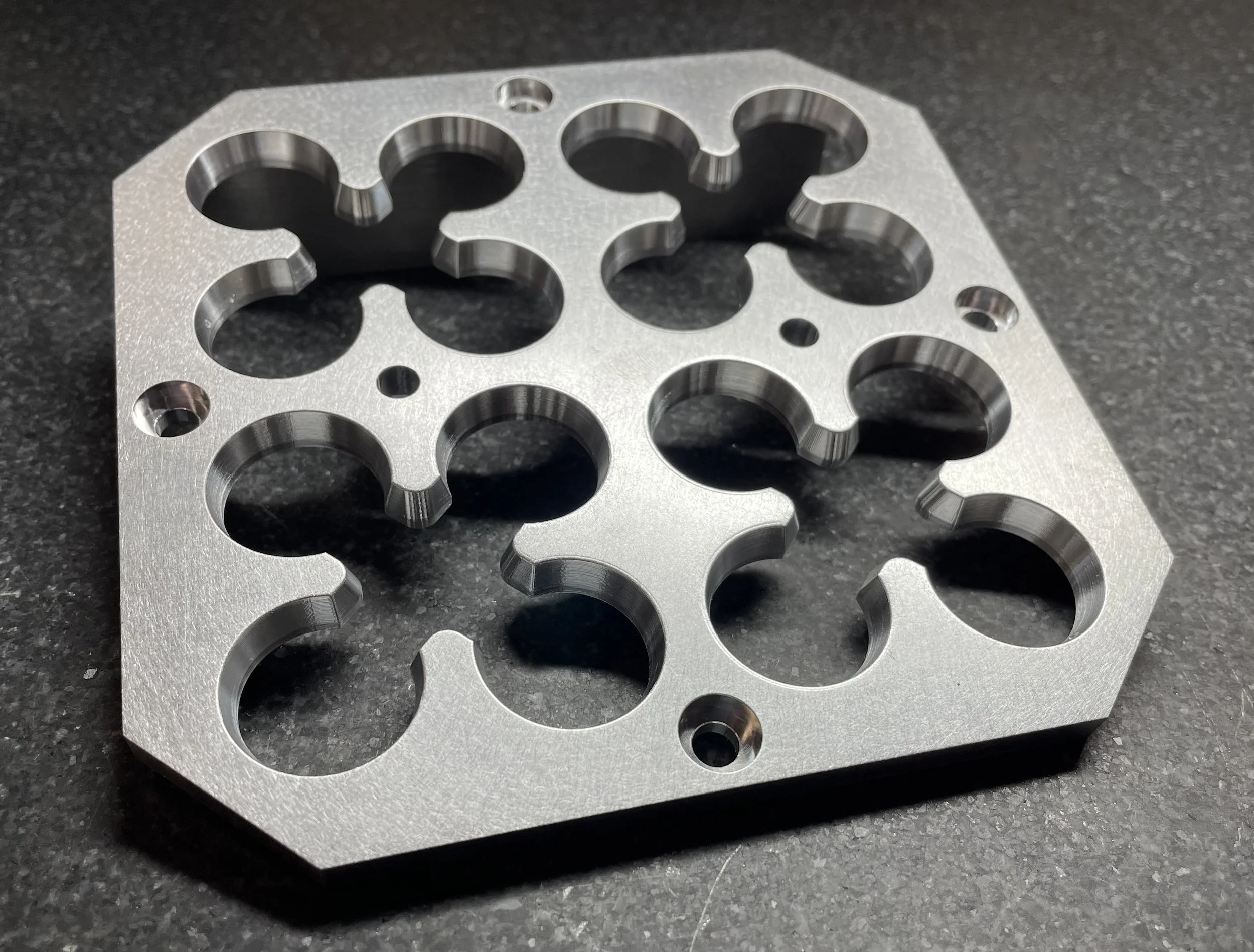
Assemblies introduce another level of complexity because every component must fit together perfectly to ensure proper performance.
Because Tool Tech serves demanding industries, including aerospace, medical, defense, and semiconductor, we routinely manufacture components with exacting specifications. Meeting these requirements takes advanced equipment, experienced machinists, and proven quality processes.
Tight Tolerances Require Greater Process Control
Maintaining extremely tight tolerances impacts every stage of our manufacturing process.
Holding tight tolerances often requires specialized tooling, increased setup time, additional inspections, and more oversight throughout production to ensure each feature meets the required specifications.
When there is an opportunity for a tolerance to be relaxed, this can significantly simplify manufacturing. We can usually produce the part in fewer operations, reducing production time and overall cost.
Finishing Requirements Add Additional Processing
Secondary finishing processes also have a significant impact on the cost of a precision machined part.
For example, many components we produce for the optics industry require anodizing. Because anodizing adds to the surface, machinists must account for this buildup. Proper planning during machining helps ensure the finished component still meets its required specifications.
Additional finishing requirements, such as masking specific surfaces, can further increase labor and processing time. Components with numerous holes or other precision features often require extensive manual masking to protect critical dimensions.
Collaboration Can Help Reduce Cost
Our manufacturing process includes conversations with our customers and their design engineers. We understand that sometimes features are non-negotiable, but we can help identify which complexities could be reduced without impacting part performance.
We often ask questions such as:
Which dimensions are truly critical?
Which tolerances directly affect performance?
Are there features that could be simplified without impacting the final application?
Even small changes can reduce machining time and simplify inspection, saving the customer money.
The Value of an Experienced Manufacturing Partner
Our continued investments in automation and 5-axis machining ensure production is as efficient as possible, increasing part quality while helping reduce overall costs.
We also prioritize transparency throughout every project, providing answers to all of your questions and explaining our processes so you understand why a part costs what it does.
Optimize Your Next Precision Machined Part
Every design decision affects the cost of a precision part. Understanding those cost drivers early in the process helps avoid unnecessary expenses.
Whether your project involves complex geometries, demanding tolerances, specialized finishing requirements, or rigorous inspection standards, Tool Technology has the experience to help you navigate the manufacturing process.
Ready to discuss your next complex project? Reach out to our precision machine shop today.